
A condo inventory loan is used to pay of maturing construction loans. Learn when, why and how to take out a condo inventory loan here.
On this page
A condo inventory loan is a type of loan used by real estate developers to pay off maturing construction loans on a new condo building that has already been fully developed.
“These loans are for condominium developments that are completed but not sold out,” said Reid Hogan, a Commercial Real Estate Advisor at MultifamilyCashin. “The developer pays off more expensive construction loans and has more time to sell remaining units.”
Essentially, the condo inventory loan “is a bridge between when construction financing and the sales of actual condos take place,” added Meg Epstein, CEO and Founder of CA South, a real estate development and investment management firm based in Nashville.
Condo inventory loans allow developers to spend more time selling their condos, without having to pay for construction, Epstein said. They are considered a bridge loan meant to refinance on the original construction loan, pushing the repayment date back, allowing the condo owner more time to sell the individual condo units.
How Is a Condo Inventory Loan Structured?
Typically, investors will take out a condo inventory loan if their condo is not fully sold out within three to five years of the construction loan’s issuance. Loan amounts end up being 60% to 70% of the total value of the unsold units, with a term of 12 to 24 months, Hogan noted, adding that the new interest rate on the condo inventory loan is also lower than the construction loan it replaces. The unsold units in the condo serve as collateral on the loan.
How Is a Condo Inventory Loan Different From a Construction Loan?
Construction loans and condo inventory loans serve different purposes and have different loan terms. For starters, a construction loan is one you get from a bank when you’re starting on a project, whether that means building or renovating, Epstein explained.
“So if I’m going to build a $50 million building, I’m going to go to my bank, and I’m going to get a $30 million loan, and I’m going to have to put in $20 million in equity,” Epstein said. “So that $30 million construction loan is meant for the purposes of building the project.”
Hogan added, “Construction loans are short-term interest-only loans that finance construction. They are riskier than a loan on a finished property and are therefore more expensive.”
Sometimes borrowers will be able to finish the construction project and sell all units within the terms of a construction loan, depending on the specific loan and the time it takes to complete a project. However, borrowers often need more time to sell the condo units after construction is complete. That’s when a condo inventory loan might come into play, granting property owners more time to sell their units before having to pay back the loan.
What Are the Advantages of Condo Inventory Loans for Borrowers?
Condo inventory loans come with a number of advantages for the borrower, and little to no downside outside of the possible risk of not being able to sell your property, especially Class A properties. For starters, condo inventory loans have lower interest rates than construction loans. In addition, borrowers have more time to sell their remaining units and are granted much more flexibility, because they don’t have to pay off the costs of construction right away.
“As a developer, I might have a short construction loan,” Epstein said. “But maybe I don’t like pre-selling my projects because I find that I’m able to get more dollars for projects that are completed and fully furnished, and people can walk through.”
In this scenario, a condo inventory loan would allow time and flexibility so that owners can fully complete their projects and get the best deal possible.
Another perspective.
All articles
The Complete Commercial Loan Package: Checklist and Template
Everything a lender expects in a commercial loan package — the full document checklist, an executive summary template, and the mistakes that stall deals.
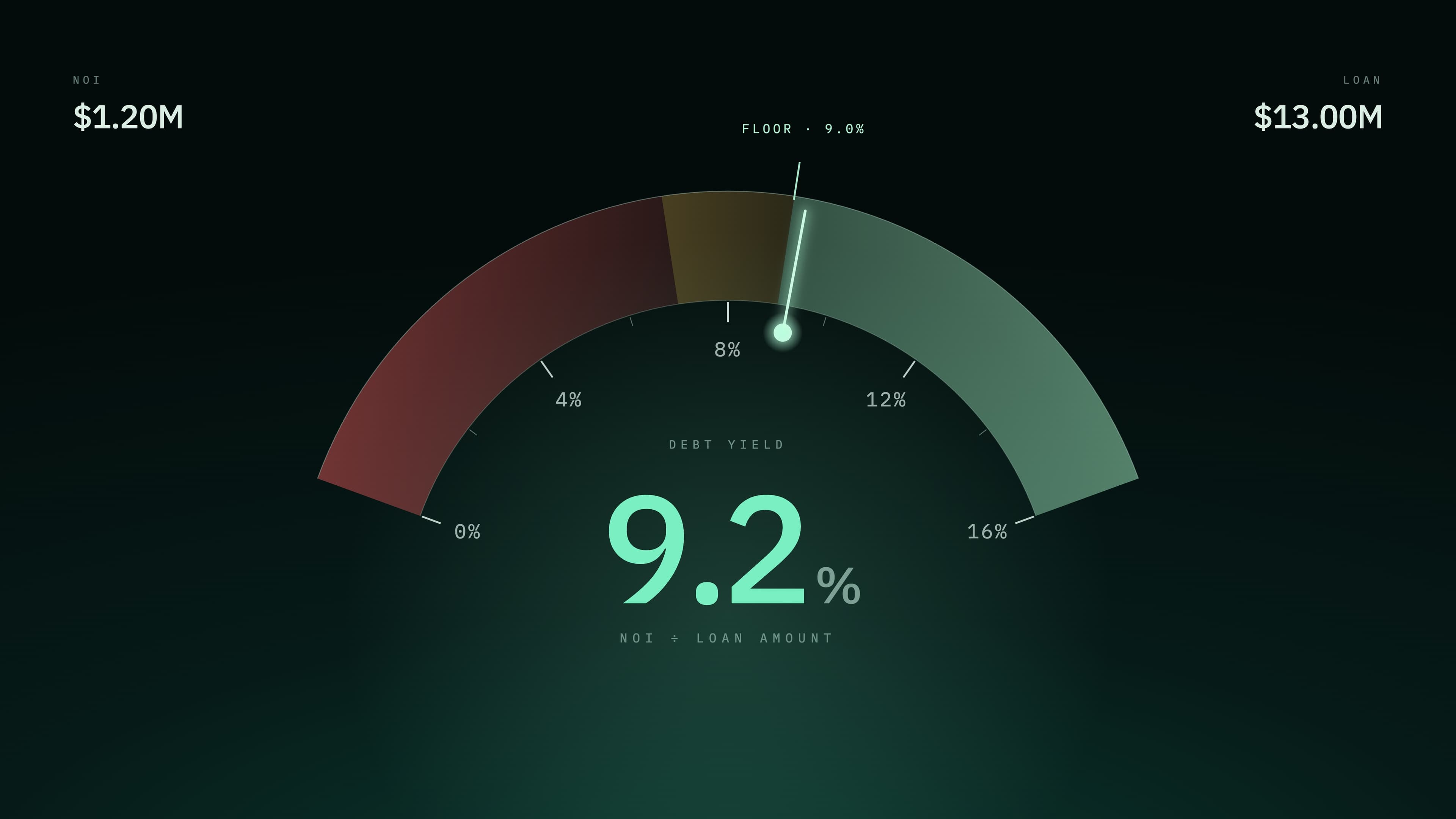
Debt yield in commercial real estate: the formula lenders use when DSCR and LTV aren't enough
Debt yield is the cash-flow yield a lender earns on the loan amount. Learn the formula, why lenders use it alongside DSCR and LTV, and what's a good debt yield.

Ground lease in commercial real estate: what it is, how it works, and when it makes sense
A ground lease lets a tenant build on land they don't own. Learn how they work, subordinated vs unsubordinated structures, and how to finance one.