
Trade fixtures are semi-permanent fixtures installed by a commercial tenant to conduct business. They are removed at the end of the lease.
On this page
To run a successful business, sometimes a tenant might need to make additions to a commercial property. Often, though, those additions are easily removable, like freestanding shelves or signage outside a building. In that case, those additions are called trade fixtures.
What Is a Trade Fixture?
In a commercial lease, a trade fixture is an item a tenant attaches or installs to a property to conduct business. Trade fixtures need to be removable or uninstallable and must be removed by the tenant when the lease ends. They are considered the personal property of the tenant, not the landlord. “The most common trade fixtures in a commercial property are shipping containers, display cases, signage and air conditioning units,” said Lyle Solomon, an attorney at Oak View Law Group.
Examples of Trade Fixtures
There are a number of structures, tools and mechanisms that could be considered trade fixtures, so long as they are removable and necessary to conduct business.
- A display counter in a store
- Shelves for products
- Bartending equipment
- Signage
- Bank equipment
- Shipping containers
- Heating or air conditioning units
If fixtures like these are present in the commercial property before a tenant moves in, they still need to be clearly delineated as trade fixtures in the lease for the tenant to be able to remove them when vacating.
When Can Trade Fixtures Be Removed?
A commercial lease like a single-tenant net lease used for restaurants, pharmacies or retail stores should specify what is considered a trade fixture so the tenant is clear on what can be and needs to be removed at the expiration of the lease. The lease has to be clear as to why the lessee is using the trade fixture and why they’re taking it with them when they leave. In situations where any of this is unclear, the tenant and/or landlord should consult a commercial real estate attorney to review the lease and clarify anything that might be uncertain.
Trade fixtures exist and can be removed under three conditions:
-
It is a necessary part of the business.
-
Removing the fixture will not damage the property.
-
The fixture needs to be removed before new tenants take occupancy of the property.
If a tenant causes any property damage when removing the trade fixture, they are then required to compensate the landlord.
Do Trade Fixtures Have to be Removed?
“Trade fixtures can’t remain on a commercial property forever,” Solomon said. “When a commercial property is sold or leased to a new tenant, trade fixtures must be removed immediately.” Commercial tenants have to remove trade fixtures before their lease ends, or at the very latest, soon after the lease ends. However, the rules regarding trade fixture removal timelines vary by state, so make sure to research what your state requires, and be communicative with the landlord to ensure you’re both on the same page.
When a trade fixture is not removed, it becomes the property of the landlord. This sometimes occurs when the lessee goes bankrupt or has to terminate their lease early.
What’s the Difference Between a Trade Fixture and an Improvement?
An improvement is a change to the property to make it better. Improvements cannot be removed. Solomon provided an example, stating that freestanding shelves that can be removed at the end of a lease are considered trade fixtures. Built-in shelves made specifically for that space, on the other hand — as is often the case with build to suit leases — cannot be removed and are considered an improvement.
What Is the Difference Between a Trade Fixture and Other Types of Fixtures?
There are a few different types of fixtures other than trade fixtures that can be added to a commercial space.
Attached Fixtures
Attached fixtures are connected to the property by hardware like screws, nails or adhesives. For instance, light fixtures can be considered attached fixtures because they’re attached to the property. However, it should be specified in the lease whether something is an attached fixture.
Chattel Fixtures
Chattel fixtures are not directly attached to the property, but rather are movable and used for daily business, Solomon explained. One example of a chattel fixture is movable clothing racks in a store, or tables and chairs at a restaurant.
Integral Fixtures
Integral fixtures serve an integral, or essential, role in the property. For instance, an oven and stove in a restaurant is considered integral, and a commercial property owner might have those installed before the tenant moves in. This kitchen equipment, then, cannot be removed and becomes part of the property itself.
Trade Fixtures Can Be a Necessary Part of Running a Business
To run a successful business like a restaurant or a retail store, trade fixtures are often essential. A restaurant can’t run without tables and chairs, which are usually not a part of the commercial property itself. And a retail store can’t run without the proper signage or display cases, so trade fixtures are necessary. When installing a trade fixture, though, be sure it can be easily removed without damaging the property, so as not to violate any conditions of your lease. Finally, make sure to complete your due diligence and go over the lease terms carefully, taking account for trade fixtures in the lease itself.
Another perspective.
All articles
Commercial Bridge Loans in Texas: How They Work and Who's Lending
How commercial bridge loans work in Texas in 2026 — typical rates, terms and leverage, plus how to find and compare commercial bridge loan lenders.
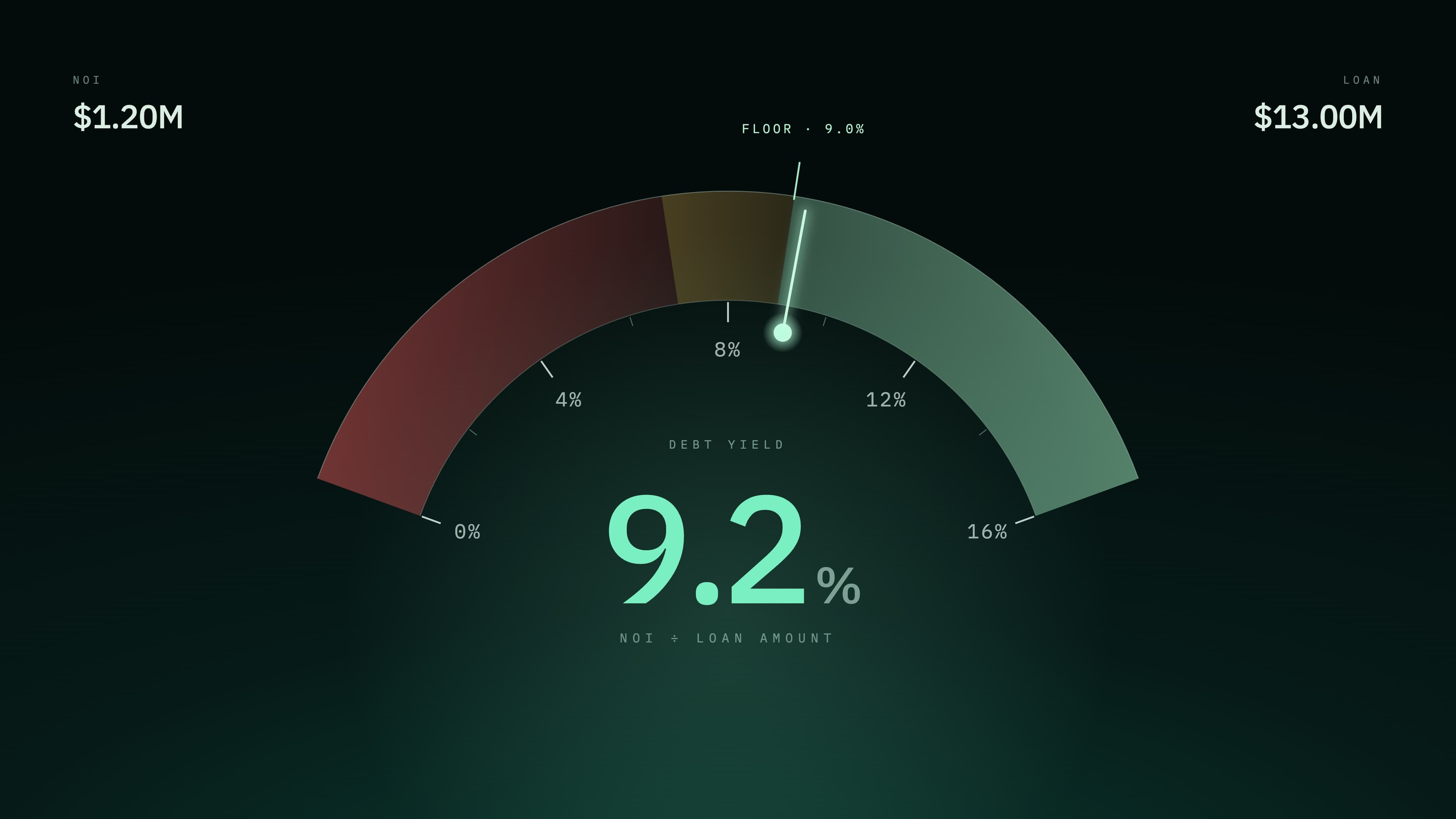
Debt yield in commercial real estate: the formula lenders use when DSCR and LTV aren't enough
Debt yield is the cash-flow yield a lender earns on the loan amount. Learn the formula, why lenders use it alongside DSCR and LTV, and what's a good debt yield.

Ground lease in commercial real estate: what it is, how it works, and when it makes sense
A ground lease lets a tenant build on land they don't own. Learn how they work, subordinated vs unsubordinated structures, and how to finance one.