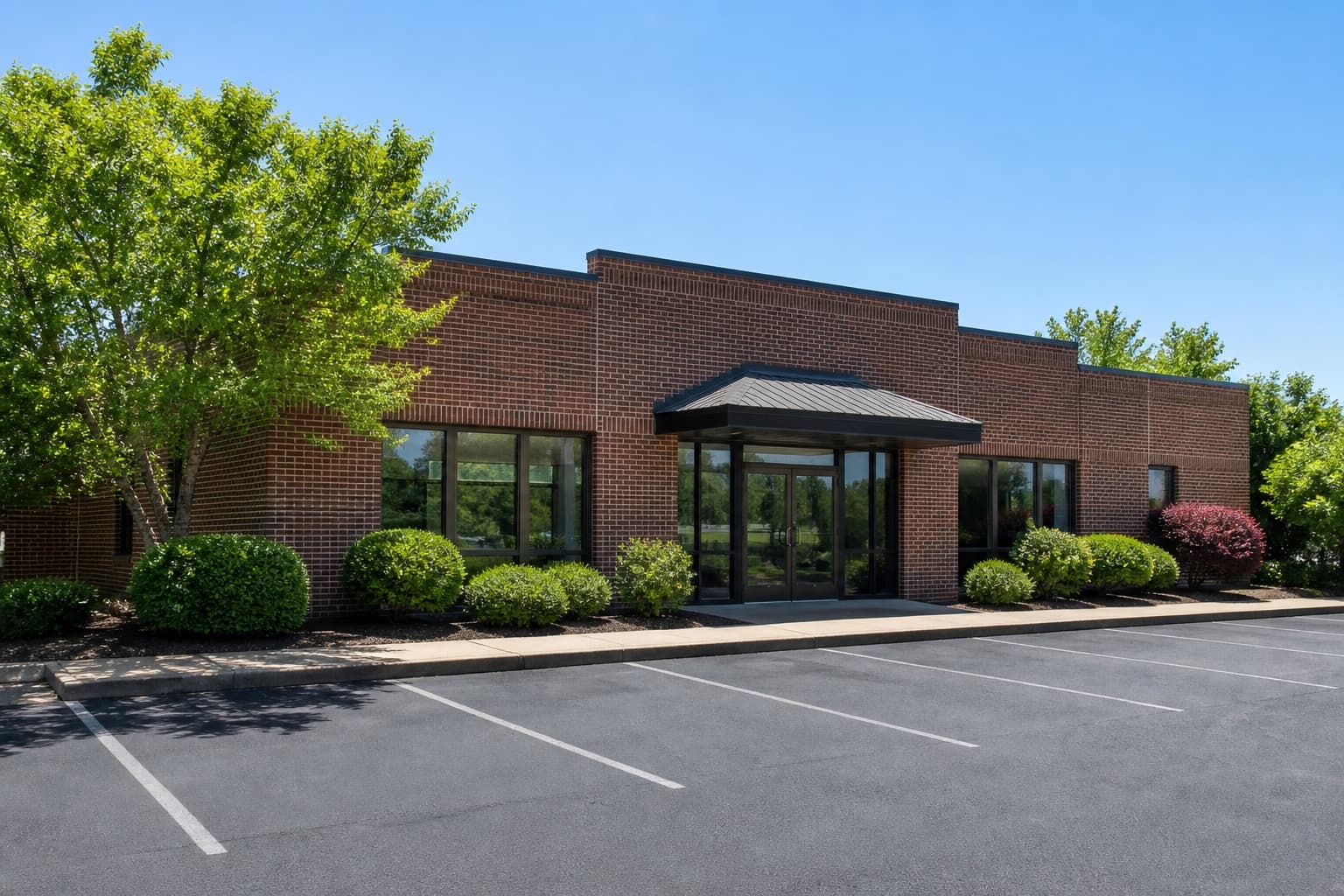
For small businesses buying the building they operate out of, the SBA 504 loan remains one of the few fixed-rate, below-market financing paths left in a market where most CRE debt still floats or resets.
How the structure works
A 504 loan isn't a single loan — it's three parties in one deal:
- Conventional lender: 50% of project cost, at their own market rate
- Certified Development Company (CDC): up to 40%, funded through SBA-guaranteed debentures, at a long-term fixed rate
- Borrower: minimum 10% equity injection (15–20% for startups or single-purpose properties)
2026 rates and terms
| Term | CDC Portion (Effective, Fixed) |
|---|---|
| 10-year | ~5.65% |
| 20-year | ~6.7% – 7.0% |
| 25-year | ~6.9% – 7.5% |
Rates are set monthly at each SBA debenture auction and are fixed for the full term once closed — no resets, no surprises. For comparison, the SBA 7(a) program's maximum rate on loans over $350,000 runs a variable 9.75%.
Who qualifies
- Property must be at least 51% owner-occupied
- Business net worth under $20 million
- Average net income under $5 million over the prior two years
- For-profit entity only — no investment property, no working capital use
Why owner-operators use it
Beyond the fixed rate, the low 10% down payment preserves working capital that a conventional 20–25% down commercial loan would otherwise tie up. The program can also finance construction, renovation, and refinancing of existing commercial mortgage debt — not just acquisitions. Owner-operators buying industrial space can also read our guide on how to buy a warehouse.
How Lev helps
Lev helps owner-operators structure the CDC/bank split, identify eligible CDCs, and compare a 504 loan against conventional and bridge alternatives when a straight purchase doesn't pencil.
Data: SomerCor, Clarivian, SBA.gov. Rates as of July 2026.