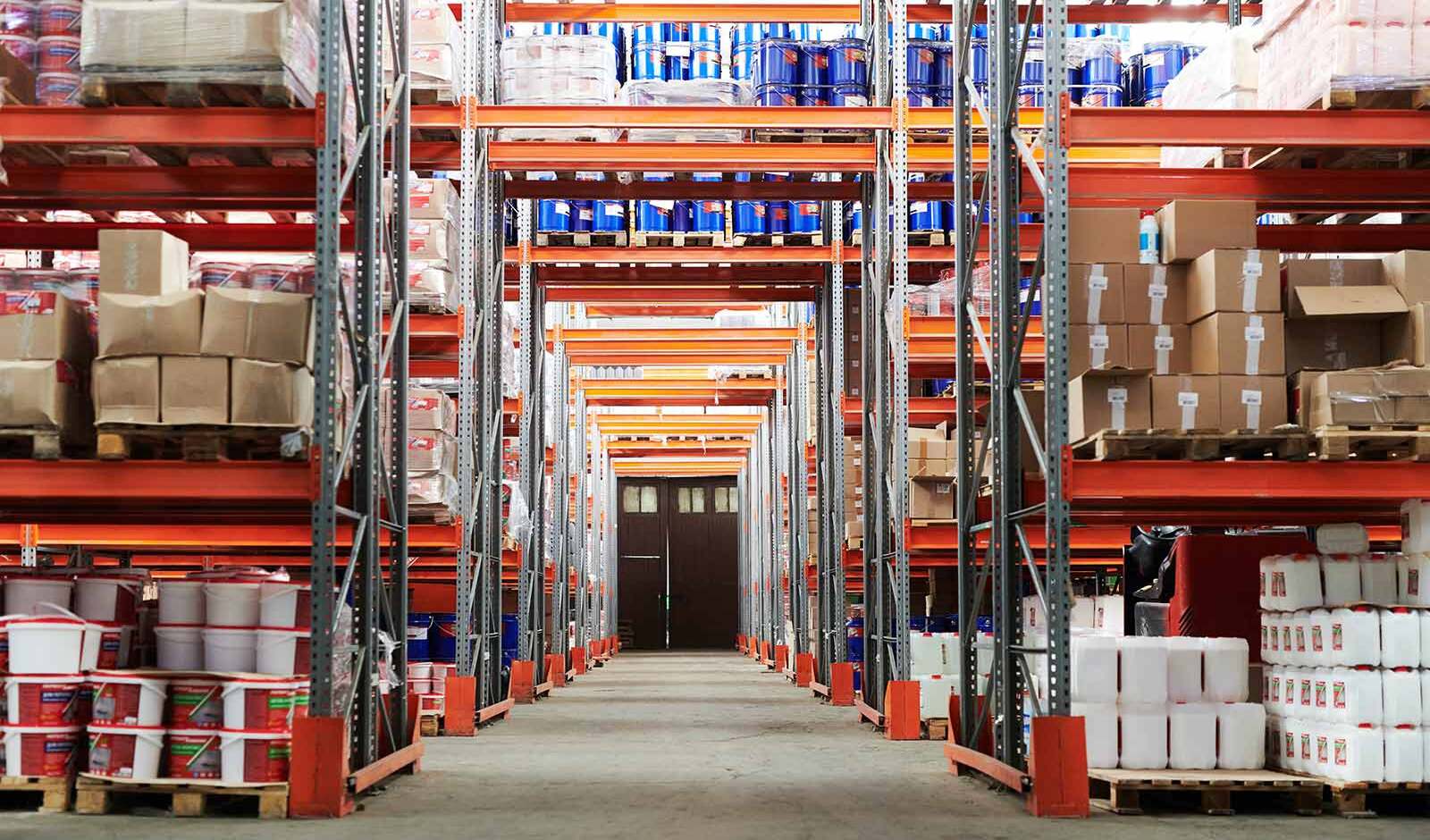
Industrial is the strongest CRE asset class. Learn how to buy a warehouse, what to underwrite, financing options, and what makes a property institutional-grade.
On this page
Industrial real estate, the broad category that includes warehouses, distribution centers, manufacturing facilities, flex space, and last-mile logistics, has been the single best-performing CRE asset class of the past decade. Driven by e-commerce, supply-chain reshoring, and the structural shortage of modern logistics space near major metros, industrial rents have climbed faster than any other property type, vacancy is at historic lows, and capital is competing aggressively for institutional-grade product.
For investors, that means industrial is no longer the under-the-radar play it was in 2014. Cap rates have compressed, deal flow is tight, and the easy money is gone. But the underlying fundamentals (limited supply of modern Class A space near population centers, durable tenant demand, lease structures that pass operating costs to the tenant) are intact, which is why industrial remains a core allocation for almost every institutional CRE investor.
This guide walks through what industrial real estate actually is, how to evaluate a warehouse investment opportunity, the financing options available, what underwriters and lenders look for, and how the industrial market is segmented today. If you'd rather skip the manual search and get matched directly with industrial-focused lenders, Lev does that automatically.
What counts as industrial real estate?
"Industrial" is an umbrella term that covers several distinct property subtypes, each with its own demand drivers and underwriting profile:
Warehouses and distribution centers: bulk storage and goods-movement facilities. These range from 50,000 square feet up to over 1 million square feet for the largest "mega-DCs." Modern Class A warehouses have clear heights of 32 to 40 feet (the distance from floor to the lowest overhead obstruction), wide truck courts, ample loading docks, and energy-efficient lighting and HVAC.
Last-mile logistics: smaller infill warehouses (typically 50,000 to 200,000 square feet) located close to population centers to support same-day and next-day delivery. These trade at lower cap rates than bulk warehouses because of their irreplaceable locations.
Manufacturing facilities: properties built or adapted for production. Often have heavier power loads, reinforced floors, and process-specific build-outs. Trade in a smaller pool of buyers because of tenant-specific finishes.
Flex space: hybrid product that combines warehouse with office or showroom. Common for smaller businesses that need both back-of-house storage and customer-facing space. Trades at higher cap rates than pure warehouse but has more durable tenancy.
Cold storage: refrigerated and frozen-storage warehouses. A specialty subclass with significantly more capex per square foot (refrigeration systems, insulated walls and floors) but stronger rent premiums and very limited new supply.
Truck terminals and crossdock: facilities designed for short-duration goods transfer, not storage. Functionally different from a warehouse (high door-to-area ratios, very little internal racking), and the buyer pool is smaller.
Different subtypes attract different lenders and investors. A core institutional buyer focused on Class A bulk distribution won't touch a 20,000-square-foot flex property, and the lenders who finance one don't always finance the other. Understanding which subtype a property falls into is the first underwriting question.
Why industrial real estate has outperformed
Three structural forces have driven industrial outperformance over the past decade and look durable into the next.
E-commerce and the supply-chain build-out: every dollar of online sales requires roughly three times the warehouse space of an equivalent brick-and-mortar dollar. As retail has shifted online, demand for distribution and last-mile logistics has grown faster than supply.
Modernization of the existing stock: a large share of the U.S. industrial base was built before 1990 and has clear heights under 28 feet, narrow column spacing, and obsolete loading. Tenants with modern operations need 32+ foot clear, ESFR sprinklers, and modern dock configurations. The mismatch between existing supply and required specs has created persistent rent pressure on Class A space.
Reshoring and supply-chain resilience: post-pandemic, U.S. manufacturers and importers have reshored or near-shored production and diversified supplier networks, driving new demand for U.S. industrial space.
Net result: national vacancy below 5% in most years over the past decade, sub-3% in many primary markets, and rent growth in the high single digits or low double digits annually for Class A product.
The headwinds: cap rate compression has tightened yield, and a recent wave of new development (much of it speculative) has eased the supply shortage in markets like the Inland Empire and Phoenix. The strongest fundamentals today are in supply-constrained infill submarkets near major population centers.
How to evaluate a warehouse investment
When you're underwriting a specific warehouse, the analysis breaks into four buckets: location, physical specs, tenancy, and the deal economics.
Location
Industrial location is about logistics, not foot traffic. The questions are:
Proximity to consumers and ports: how close is the property to the population it serves, and to the ports, rail, and interstate junctions that move goods? A property within 20 miles of a major metro can command last-mile pricing; a property 90 miles out trades like bulk distribution.
Highway and interchange access: trucks need to get in and out fast. Properties on or near major interstate interchanges trade at meaningful premiums to identical buildings on county roads.
Labor market: warehouse and logistics operations are increasingly labor-intensive. Markets with deep, available labor pools (and not at $25+ per hour) get a leg up.
Submarket and pipeline: how much new product is under construction or planned within the same trade area? Healthy submarkets have under 3 to 5% vacancy with limited new supply. Markets with double-digit vacancy or large speculative pipelines warrant much more caution.
Physical specs
The physical attributes that institutional buyers and Class A tenants demand:
Clear height: the distance from finished floor to the lowest overhead obstruction. Modern Class A is 32 feet minimum, often 36 to 40 feet. Older buildings at 24 to 28 feet trade at significant discounts and can't be re-tenanted by most modern logistics users.
Loading: dock-high doors (typically one per 8,000 to 10,000 square feet for modern distribution), drive-in doors for non-truck loading, and ample truck court depth (130 to 185 feet, depending on truck configurations).
Column spacing: 50 feet by 50 feet or wider is preferred for modern racking. Older buildings with 30 by 30 spacing limit how the tenant can configure operations.
Power: heavy electrical service is essential for cold storage, manufacturing, and high-throughput distribution. 4,000 amp service is becoming more common; older properties may have only 800 to 1,200 amp service.
Sprinklers: ESFR (Early Suppression Fast Response) is standard for modern bulk distribution. Older wet pipe systems may require expensive upgrades for certain tenant uses.
Office finish: typical Class A warehouse includes 3 to 5% office finish at the front of the building. More office is fine; less can limit the tenant pool.
Site coverage: building footprint as a percentage of total land. Lower coverage (35 to 45%) is preferred because it allows for trailer storage and future expansion. Sites at 60%+ coverage trade at a discount.
Tenancy
The single most consequential underwriting question on most warehouses is tenant quality and lease structure.
Single tenant vs multi-tenant: warehouses are often single-tenant net-leased properties. That's high-quality cash flow when the tenant is strong, but it's also a binary risk; if the tenant leaves, the property goes from 100% occupied to 0% overnight. Multi-tenant flex and light industrial properties diversify the tenant risk but require more active management.
Tenant credit: what's the financial profile of the tenant? Is it a credit tenant (publicly rated, investment-grade), a strong private operator, or a smaller business with limited financial history? Credit tenants get pricing premiums and can support longer leases.
Lease structure: most industrial leases are triple net (NNN), meaning the tenant pays taxes, insurance, and maintenance directly. This shifts operating risk to the tenant and stabilizes the landlord's net cash flow. Less common are double net or modified gross leases, where the landlord retains some operating expense exposure.
Lease term and escalations: how many years are left, and how does rent escalate? Modern industrial leases often have 10 to 15 year initial terms with 2.5 to 3.5% annual escalations or CPI-based bumps. Shorter leases or flat rent introduce more re-leasing risk.
Tenant improvement obligations: who pays for build-out at renewal or new lease? Net-leased deals typically push capex to the tenant, but landlords often face larger TI obligations on shorter-lease, smaller-tenant properties.
Deal economics
Putting it together:
Cap rate: NOI divided by purchase price, expressed as a percentage. Class A institutional industrial in primary markets trades at cap rates in the high 4s to low 6s today. Older or secondary properties trade at 6.5 to 8% or higher. Cap rate alone isn't enough; you also need to know how reliable the NOI is and how it will grow.
Going-in vs stabilized yield: a value-add warehouse might trade at a 5.5% going-in cap with a path to a 7.0% stabilized yield after lease-up or rent re-set. Distinguish what you're buying (current yield) from what you're underwriting (yield once your business plan executes).
Rent comparison to market: is the in-place rent at, above, or below market? An at-market or above-market rent on a 9-year remaining lease term limits upside. A meaningfully below-market rent (a "mark-to-market" opportunity) is a real value-add driver if the lease expires within a reasonable hold period.
Exit assumptions: what cap rate will the property trade at when you sell? Be conservative; assume rates 50 to 100 basis points higher than today's market when underwriting the exit.
Financing options for industrial real estate
Industrial benefits from a deep and competitive lender market. The main financing sources:
Banks (regional and national): provide both stabilized permanent loans and bridge/construction financing. Typically 60 to 70% LTV, 25-year amortization, 5 to 7 year initial fixed term. Most flexible on smaller deals and relationship-based lending.
Life insurance companies: long-term fixed-rate loans on stabilized institutional-grade industrial. 10 to 25 year terms, 60 to 65% LTV, 1.25 to 1.30 DSCR. Pricing is often inside CMBS for top properties, but life co's are selective and focused on Class A.
CMBS conduits: 10-year fixed-rate loans, 70 to 75% LTV, non-recourse. Standardized terms that work well for stable properties with multi-year credit-tenant leases. Less flexible after closing.
Debt funds and private credit: bridge and value-add loans for properties that need lease-up, repositioning, or capex. Higher leverage (often 75 to 80% LTV or LTC) and faster execution, but priced at 200 to 400 basis points over a floating index.
SBA 7(a) and 504: for owner-occupied properties (the buyer or affiliate occupies at least 51% of the space). Up to 90% LTV across the senior plus 504 stack. Long amortizations.
Agency loans: not available for industrial. Fannie Mae and Freddie Mac only finance multifamily.
For a deeper look at how lenders size deals and where pricing is today, see Lev's guides to DSCR loans, LTV ratio, and commercial bridge lenders.
How to buy a warehouse: a practical sequence
The actual mechanics of acquiring an industrial property:
1. Define the box. Property type (warehouse, distribution, flex, cold storage), size range, target market(s), tenant strategy (single net-leased, multi-tenant, owner-user), and target return profile. The narrower the box, the easier sourcing becomes.
2. Source deals. Industrial deals come from: brokerage marketing campaigns (listing services, broker emails), off-market relationships with owners, online platforms, distressed pipelines, and direct mail to owners in targeted submarkets. Many of the best industrial deals never hit a broad market.
3. Tour and conduct preliminary diligence. Site visit. Check clear height (use a measuring rod, don't trust the OM), trailer storage, truck court depth, dock count and condition, office finish, mechanical condition. Pull recent sales comps and rent comps for the submarket.
4. Submit a letter of intent (LOI). Outline price, deposit, diligence period, closing timeline, and any contingencies. LOIs in industrial often include a 30 to 45 day diligence period and a 30 to 60 day closing.
5. Negotiate and execute the purchase agreement. Specifies all material terms, schedule, representations and warranties, and the diligence and closing conditions.
6. Full diligence. Title and survey, environmental Phase I (Phase II if any flags), property condition assessment, structural and mechanical inspections, roof inspection, lease audit and tenant estoppels, zoning verification, and review of all property-level financials. For a deeper framework, see Lev's CRE due diligence guide.
7. Finalize financing. Apply to lenders, lock in the senior loan (and any mezz or pref equity), satisfy lender conditions, and align loan closing with property closing.
8. Close and stabilize. Close on the property, transition operations from the seller, execute the business plan (lease-up, capex, re-tenancy as applicable).
Timeline from LOI to close is typically 60 to 120 days for a financed deal, faster for cash transactions or repeat-counterparty deals.
Common pitfalls in industrial investing
A short list of mistakes that show up regularly in industrial deals:
Buying obsolete space at a value rate: a property that costs less per square foot than the market often costs less because it can't be re-leased to modern users. Sub-28-foot clear heights, narrow column spacing, and inadequate truck courts shrink the tenant pool dramatically.
Underwriting in-place rent as market: if the in-place rent is $4 per square foot but market is $9, the deal looks great until you renew the lease and see the tenant push back hard. Don't assume the mark-to-market is automatic; verify market rent with three to five comps.
Ignoring submarket pipeline: a 2-million-square-foot speculative project under construction five miles away will impact rents and vacancy when it delivers. Always check the submarket pipeline as part of underwriting.
Single tenant in a tertiary submarket: a 100,000 square foot single-tenant warehouse in a market with only 12 logistics tenants of that size is a re-leasing time bomb. Confirm the tenant pool depth before underwriting a 10-year hold.
Underestimating capex: industrial roofs, parking lots, and HVAC systems are expensive. A 30-year-old roof with eight years of useful life left is going to need $400,000 to $1.5 million within the hold period. Include capex reserves in your underwriting, not just operating expenses.
Environmental surprises: industrial properties have a higher environmental risk profile than other CRE because of historic and current industrial uses. A Phase I should be standard on every acquisition; a Phase II is often warranted on sites with industrial history.
Frequently asked questions
Is industrial real estate still a good investment in 2026?
Industrial fundamentals remain strong, but the easy returns of the 2014 to 2022 cycle are gone. Cap rates have compressed, and new supply has caught up in some markets. The best opportunities today are in supply-constrained infill submarkets, value-add deals with mark-to-market rent upside, and specialty subclasses (cold storage, last-mile, manufacturing) where supply is structurally limited.
What's the difference between a warehouse and a distribution center?
Functionally, similar. Distribution centers are typically larger (200,000+ square feet), have more dock doors per square foot, are designed for higher throughput (goods moving in and out daily), and are located near transportation infrastructure. Warehouses can be smaller and more storage-oriented. The line between the two has blurred as e-commerce has standardized building specs.
How much does an industrial property cost?
Pricing varies wildly by market and class. Class A bulk distribution in primary markets trades at $100 to $200 per square foot, with land alone often $1.5 to $5 million per acre. Smaller flex and older properties in secondary markets can trade at $50 to $100 per square foot. Cold storage trades at meaningful premiums because of the build-out cost.
What's a good cap rate for industrial real estate?
Today, Class A institutional industrial in primary markets trades in the high 4s to low 6s. Class B properties or secondary markets are 6.5 to 8%. Specialty subclasses (cold storage, last-mile) often price tighter, sometimes inside 5%. "Good" depends on the property's risk profile and growth trajectory, not just the headline number.
Can I get an SBA loan for a warehouse?
Yes, if the buyer or affiliate occupies at least 51% of the space (owner-occupied requirement). SBA 7(a) and 504 are common for smaller industrial deals (under $5 million typically). For pure investment properties without owner-occupancy, SBA isn't available; use bank, life co, or CMBS instead.
How long should I hold an industrial property?
Most institutional industrial business plans target a 5 to 7 year hold. Long enough to execute lease-up or repositioning, short enough to capture cap rate compression or rent growth. Some core investors hold indefinitely for the steady cash flow. Match the hold period to your strategy and capital structure.
Are NNN leases really fully passive?
Closer to passive than gross leases, but not perfectly. The tenant pays operating expenses, but the landlord still has structural responsibility (roof, walls, structural elements), oversight on capital projects, and re-leasing responsibility at lease expiration. A long-credit-tenant net lease is the most passive form of CRE ownership, but it's not zero-effort.
What does "absolute NNN" mean?
A lease where the tenant is responsible for everything, including structural maintenance, roof, walls, and capital replacements. The landlord is essentially a passive bondholder collecting rent. Absolute NNN leases are common with credit tenants on long-term leases. Standard NNN typically still leaves the landlord responsible for structural items.
How is industrial different from office or retail?
Industrial demand is structurally more durable than office (which faces remote-work headwinds) and retail (which faces e-commerce headwinds). Industrial lease structures are simpler and more landlord-friendly. Capital intensity per square foot is lower (less interior finish, simpler HVAC). The trade-off: industrial cap rates are now tighter than they were a decade ago, so the yield premium has narrowed.
What's the most common mistake first-time industrial investors make?
Confusing physical specs that look fine with specs that work for modern tenants. A 26-foot clear, 30 by 30 column spacing, and a 110-foot truck court might pencil at acquisition but will not re-lease at full market rent to a modern logistics tenant. Always evaluate specs against current institutional standards, not against what's standing today.
The takeaway
Industrial real estate is the most durable CRE asset class going into the next cycle, but it's no longer an easy yield play. The properties that win are those with modern specs, infill locations near population centers, and strong tenant credit on net leases with rent escalations. The biggest underwriting risks are obsolescence (buying a building that can't re-lease), submarket pipeline (new supply pressuring rent and vacancy), and capex (industrial buildings have major reserve requirements you can't ignore).
For first-time and experienced industrial investors alike, the right financing is what often makes or breaks the return profile. Start with Lev to get matched with industrial-focused lenders, see real-time pricing across the senior debt market, and underwrite your next deal with the same data the institutions use.
Another perspective.
All articles
10 Best Cities For Commercial Real Estate Investment
Which 10 cities have the best commercial real estate markets in 2022? These hot spots are the best places to develop your next project.
What is Beta in Commercial Real Estate Finance?
Beta measures the systematic risk (also known as volatility or market risk) of a portfolio or asset when compared to the whole market.

What Is a Freehold Estate in Real Estate?
A freehold estate is ownership with no fixed end date. Learn fee simple, life estate, freehold vs leasehold, and examples in commercial real estate.