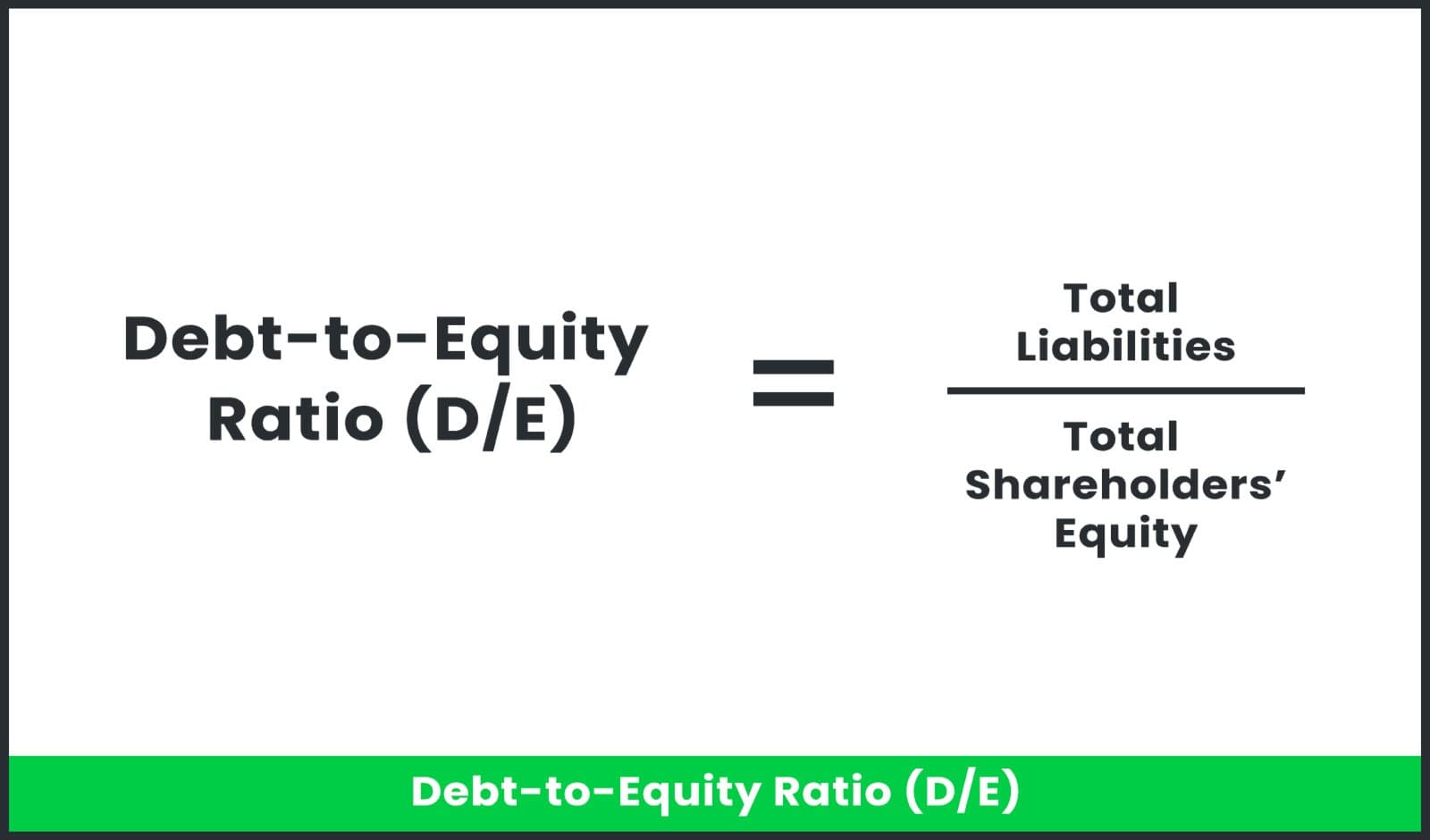
One of the most important equations in corporate finance, debt-to-equity ratio (D/E) calculates a company’s financial leverage.
Debt-to-equity ratio (D/E), similar to debt ratio, calculates a company’s financial leverage.
The formula for debt-to-equity ratio (D/E) is as follows:
Debt-to-Equity Ratio (D/E) = Total Liabilities ⁄ Total Shareholders’ Equity
This equation is most important in corporate finance. It measures to what degree a company is financing through debt rather than wholly owned funds. In the case of business dropping, this ratio shows to what extent a company can cover costs solely through shareholder equity. A low debt-to-equity ratio would suggest low-risk, as the company has not been aggressive in financing its growth with debt. A high debt-to-equity ratio would suggest the opposite — being associated with high financial risk.
Just like with debt ratio, it’s hard to compare figures from industry to industry. If a company has a higher D/E ratio than its competitors, this should be cause for concern. If a company’s debt-to-equity ratio is below zero (negative), this could be a sign that the company is at risk of bankruptcy.
Examples in Commercial Real Estate
On average, the debt-to-equity ratio in the real estate sector is ~352% (3.5:1). Whereas, real estate investment trusts (REITs) are closer to 366%. Real estate management companies come in on the lower end of the scale at 164%. There are many reasons D/E ratios differ from industry to industry, one of the key reasons is the nature of business. Some businesses can manage a high level of debt, this could be due to stable income and demand in services regardless of the state of the economy (e.g. electricity utilities).
Another reason for the variation in D/E ratios is the capital-intensive nature of an industry. The oil and gas refining industry, for example, demands high amounts of financial resources to produce their product. Whereas, office spaces, for example, do not require such a capital-intensive approach. These factors play a role in determining if a company’s debt-to-equity ratio is healthy.
Short or Long-term D/E Ratio
Of course, short-term debt is part of a company’s leverage. However, due to these liabilities being paid in a year or less, they aren’t as high-risk. The more long-term debt you have, the higher your financial risk; despite maybe having the same D/E ratio as another company with less long-term debt.
The new formula for long-term debt-to-equity ratio (D/E) is as follows:
Long-term Debt-to-Equity Ratio (D/E) = Long-term Liabilities ⁄ Total Shareholders’ Equity
Another perspective.
All articles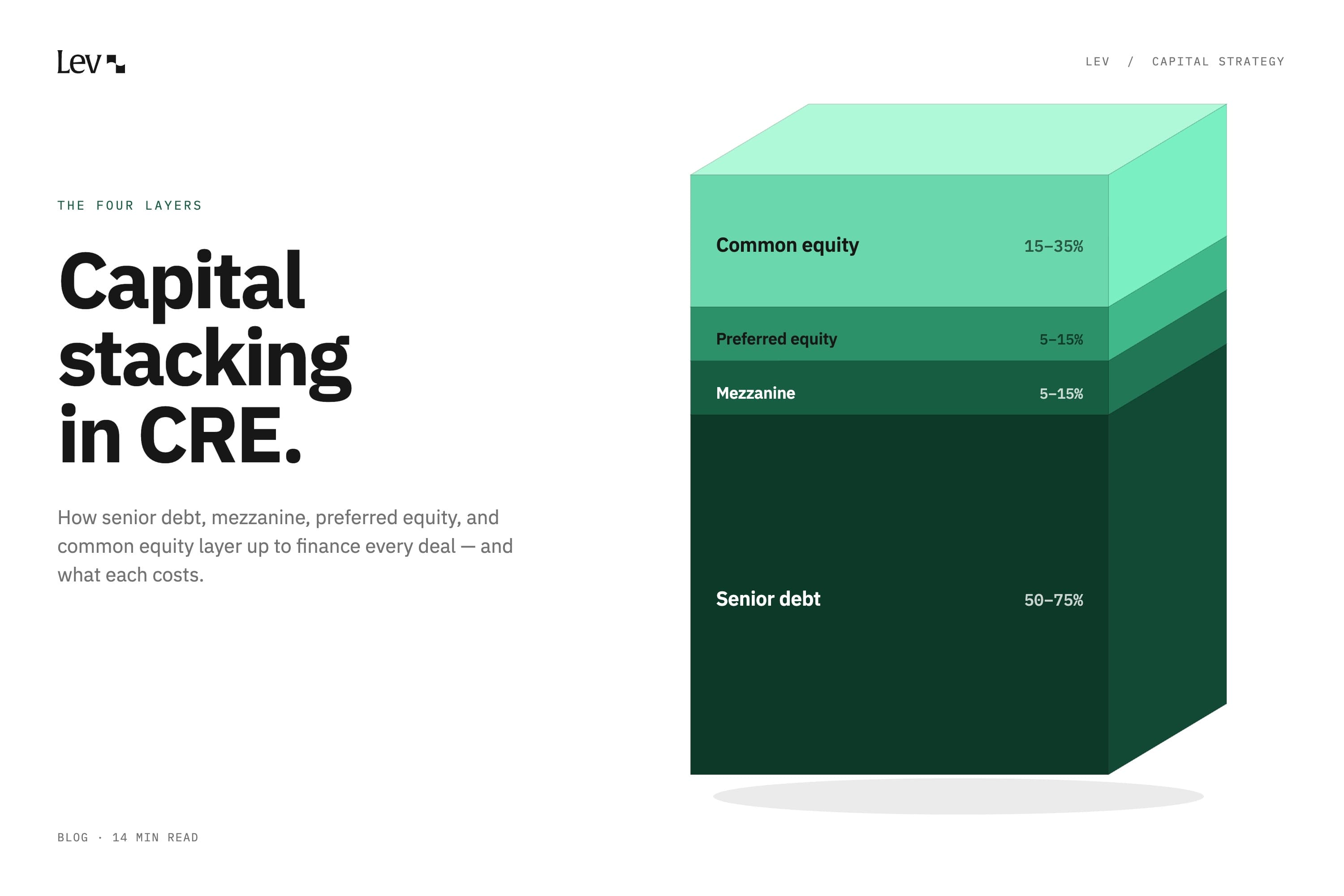
Capital stacking in commercial real estate: how senior debt, mezzanine, preferred equity, and common equity fit together
The capital stack is how every CRE deal gets financed. Learn how senior debt, mezzanine, preferred equity, and common equity layer up, and what each costs.

Preferred Equity vs Common Equity: What’s the Difference?
Where in the capital stack is preferred equity vs common equity? Manage risk and invest wisely with this refresher on preferred equity.

Preferred equity vs mezzanine debt: which is right for your CRE deal?
Preferred equity or mezzanine debt — which fills your CRE capital stack gap? Compare cost, control, risk, and tax treatment to pick the right fit.